
The Moment You Realize the Opener Isn't Going to Help
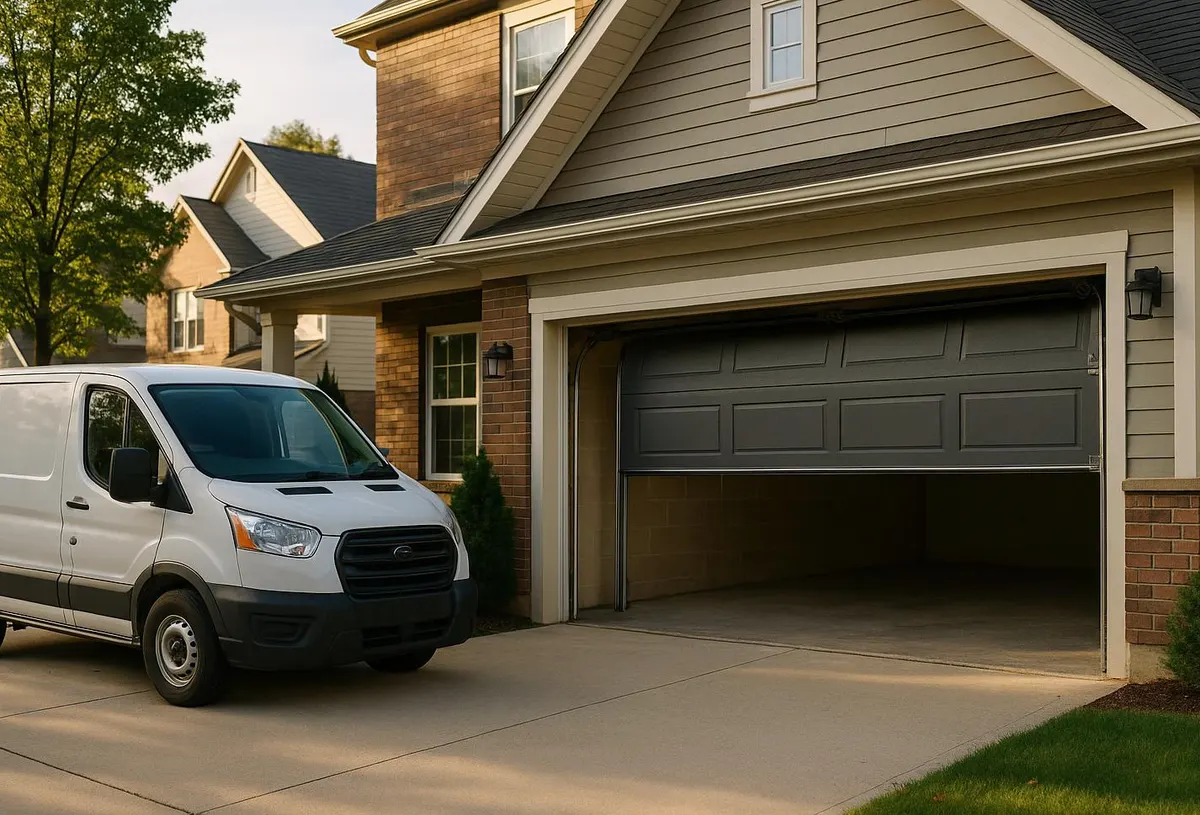
The power flickers off during a storm rolling through Macomb County, and you're standing in your garage holding your keys, staring at a door that won't move. Maybe you need to get the car out for work. Maybe you just got home and the door won't close behind you. Either way, the opener is dead weight right now, and the door feels like it's sealed shut. It isn't. Every garage door with an automatic opener has a manual release built in for exactly this situation, and knowing how to use it safely makes the difference between a quick fix and a damaged door.
Tools You'll Need
- A flashlight or headlamp (phone flashlights work, but a headlamp frees up your hands)
- A step stool if your release cord hangs high or your door is tall
- Work gloves, especially useful if the door or track has any rust or grit from winter road salt
- Nothing else — this is not a tools-and-wrench job, it's a careful-hands job
Step-by-Step: Opening the Door Manually
- Find the emergency release cord. It's the red handle hanging from a cord near the top of the door, connected to the trolley that rides along the opener's rail.
- Make sure the door is fully closed before you pull it. If the door is partway open when you disengage the trolley, it can drop suddenly.
- Pull the cord straight down and toward the opener motor. You'll feel and hear the trolley disconnect from the rail. The door is now fully manual.
- Lift slowly, using both hands near the center of the bottom panel. A properly balanced door should lift with moderate, even effort and more or less stay where you leave it partway up. If it feels unusually heavy, jerks, or won't stay put on its own, stop. That's a spring problem, not a power problem, and forcing it can cause the door to fall.
- Prop the door open if you need it open for a while. A vice grip or locking clamp on the track just below the bottom roller, on each side, keeps the door from sliding back down while you're in and out.
Step-by-Step: Closing the Door Manually
- Remove any clamps or props holding the door open.
- Lower the door slowly using both hands, guiding it down rather than letting gravity do the work.
- Press down firmly at the bottom to make sure it seats fully against the floor, especially important once winter sets in since a gap at the bottom lets cold air, snow, and meltwater in.
- If your door has a manual lock bar, engage it for security until power and the opener are back.
Step-by-Step: Re-Engaging the Opener Once Power Returns
- With the door fully closed, pull the emergency release cord again, this time toward the door (opposite direction from before) to put the trolley back in line with the rail.
- Use the wall button or remote to run the opener. As the door moves, the trolley should click back into place and lock onto the rail within the first few inches of travel.
- Let the door complete a full open-and-close cycle while you watch it. It should move smoothly, stop at the usual points, and reverse normally if something blocks the sensor beam.
- Check that the photo-eye sensors near the bottom of the tracks are aligned and clean, since a jostled sensor (sometimes caused by someone bumping it during the manual process) will keep the opener from closing the door at all.
What's Fine to Handle Yourself vs. What Needs a Technician
Pulling the release cord, lifting and lowering the door by hand, propping it open, and reconnecting the trolley once power is back are all reasonable homeowner tasks. What's not: if the door felt heavy or uneven when you lifted it, if it dropped instead of staying put, if the trolley won't reconnect to the rail, or if the opener runs but the door doesn't move or jumps off its track. Those point to a broken or weakened spring, a bent track, or an opener mechanism issue, and trying to force any of those can injure you or wreck the door.
When to Call Clinton Township Garage Door Specialists
If your door was hard to lift by hand, closed unevenly, or the opener won't re-engage properly after the power comes back, that's worth a service call rather than repeated manual workarounds. We handle spring replacement when a door feels unbalanced or refuses to stay put partway open, and garage door opener repair and installation when the trolley, sensors, or motor aren't cooperating after an outage. Given how often Macomb County sees ice storms and summer line-knocking thunderstorms, it's also worth having a preventive maintenance visit before winter to make sure your springs, cables, and opener are in good shape before the next outage catches you off guard.
If your garage door gave you trouble during the last outage or isn't resetting the way it should, call Clinton Township Garage Door Specialists. We serve Clinton Township and the surrounding Macomb County area, and we can get your door back to working right before the next storm rolls through.